

Claris Madhuku
Zimbabwe has periodically witnessed crimes so brutal that communities struggle to comprehend how human beings can inflict such cruelty upon one another.
From historical cases of serial murderers and violent offenders to recent killings that have shocked the nation, society is increasingly confronted with difficult questions about morality, humanity, and the future of Ubuntu.
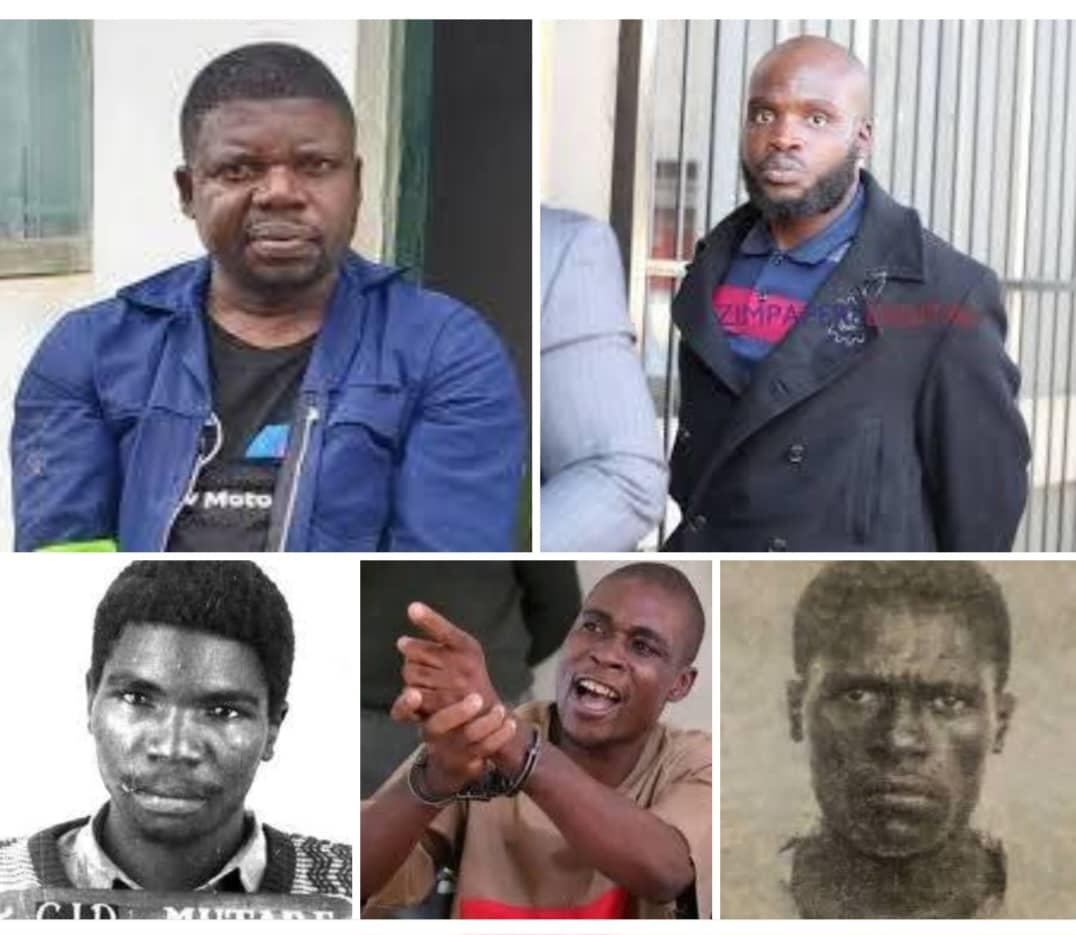
The country still remembers the chilling cases of Stephen Chidhumo and Edmund Masendeke, whose crimes involving murder, armed robbery, and rape left communities traumatized.
Their execution by hanging in 2002 symbolized society’s strongest condemnation of acts viewed as beyond ordinary criminality.
Years later, Zimbabwe once again confronted horror through the ritual murder of Tapiwa Makore Junior, a case that shocked the conscience of the nation.
The sentencing to death of Tafadzwa Shamba and Tapiwa Makore Senior in 2022 for participating in the murder reinforced the painful reality that extreme violence continues to emerge within communities that once prided themselves on strong social bonds.
Today, recent cases continue this disturbing trail.
Jaison Muvevi was sentenced to four life sentences plus additional years after multiple murder convictions. Anymore Zvitsva received an 89-year sentence following violent crimes that terrorized communities.
Meanwhile, allegations against Shepherd Severa—who remains in custody accused of slitting the throat of a friend, and allegedly sucking blood from his victim—have created renewed fear and disbelief.
These are not merely crimes; they represent forms of violence often associated with the underworld, acts many communities describe as cold-blooded, ruthless, and beyond normal human comprehension.
Yet these incidents are happening within ordinary communities, villages, townships, and families.
This national neurosis and growing social euphoria surrounding extreme violence must now be confronted through active social interception. Crime prevention cannot remain exclusively within police stations, courts, and prisons. Churches, traditional leadership, schools, families, youth structures, and community institutions must reclaim their role in rebuilding social morality.
As a social and political analyst working with grassroots institutions such as Platform for Youth and Community Development (PYCD) and Vemuganga Community Radio, institutions that promote Indigenous Knowledge Systems and African heritage, one reality remains clear: African societies historically viewed human life as sacred. Ubuntu/Hunhu philosophy teaches collective responsibility because violence destroys both individuals and communities.
The psychological impact extends beyond the crime scene. Survivors carry trauma. Families endure permanent grief. Communities develop fear, mistrust, and anxiety that can persist for generations.
This is precisely where community radios become important social institutions rather than simply information platforms. Community radios create spaces for difficult conversations, behavioral change campaigns, intergenerational dialogue, cultural education, and community healing. By amplifying local voices, traditional wisdom, faith perspectives, and community experiences, they become instruments for restoring humanity.
Punishment may remove perpetrators from society, but rebuilding the national psyche requires communities themselves to restore Ubuntu before violence becomes normalized.


