

Farai Mabeza
The United Nations Development Programme (UNDP) has identified 31 priority investment opportunities in Zimbabwe requiring approximately US$535 million, as efforts intensify to connect local businesses and projects with suitable sources of capital.
The findings are contained in the Zimbabwe Impact Investment Map, developed by UNDP Zimbabwe and the Zimbabwe Investment and Development Agency (ZIDA), with technical support from CrossBoundary Advisory.
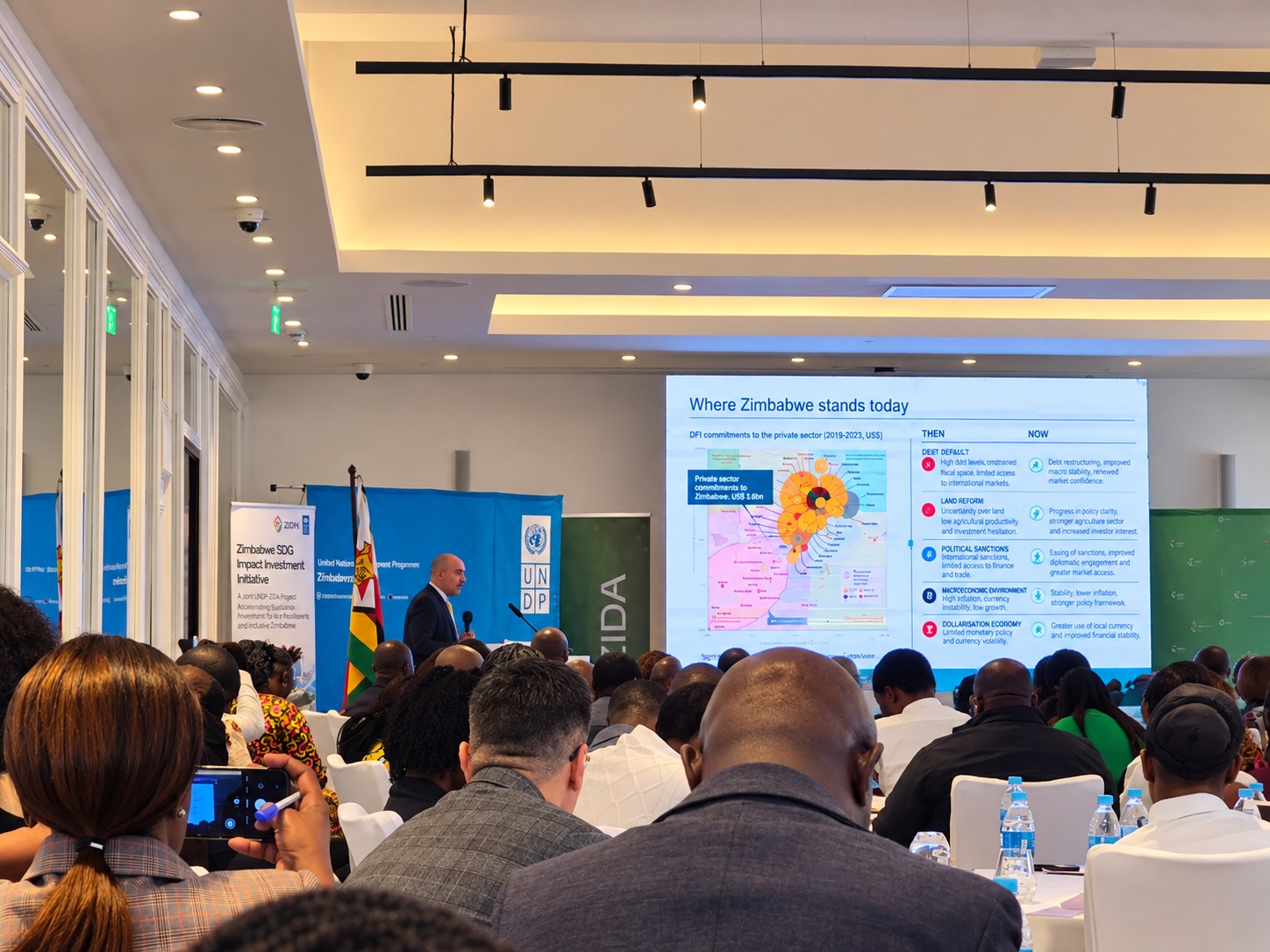
The findings were presented at the National Stakeholder Forum on Impact Investment held in Harare on September 11, bringing together government, businesses, banks, pension and insurance institutions, international investors, industry associations and development partners.
According to the Map, 98 potential investment opportunities were identified, with total indicative financing requirements of about US$923 million. Of the 31 priority opportunities, 15 could potentially advance within six months, subject to project preparation, due diligence and investor interest.
More than 85 potential capital providers were also mapped, including development finance institutions, impact investors, debt funds, private-equity funds and domestic financial institutions.
UNDP Zimbabwe Resident Representative Dr Ayodele Odusola said the exercise was intended to move beyond identifying investment opportunities towards getting them financed.
“The Zimbabwe Impact Investment Map should not be seen as the launch of another report. It is market intelligence intended to help us move from development priorities to investable solutions.”
Odusola said the challenge was now to establish which opportunities could progress, what was holding them back and what support was required.
“We now need to determine which transactions can move, what is preventing them from moving, what support they require and who needs to act.”
The opportunities span agriculture, renewable energy, financial services, manufacturing and real estate, with related infrastructure projects also identified.
Potential investments could help connect smallholder farmers to formal markets, expand energy access, improve SME financing, strengthen local manufacturing and address Zimbabwe’s housing deficit.
UNDP said inclusion on the Map does not mean projects are investment-ready, with businesses still required to demonstrate financial viability, credible management, suitable financing structures and measurable development impact.
The next phase will focus on project preparation, investor engagement and financing partnerships, with UNDP and its partners expected to select a limited number of opportunities for focused follow-up.


