

Zimbabwe is set to receive US$ 9.4 million from the African Development Bank (AfDB) to strengthen rural communities against climate shocks.
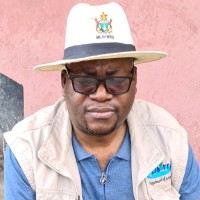
Lands, Agriculture, Fisheries, Water, and Rural Development Chief Director for Business Markets and Trade Clemence Bwenje said the fund would be entirely focused on developing inclusive and resilient agriculture value chains.
“This is what we need for the rural communities. Rural communities are particularly vulnerable to climate-related shocks, including droughts and floods. This project will make sure that our farmers are protected. Their livelihoods will be improved,” Bwenje said in an interview.
He was speaking shortly after a validation workshop in Harare for the Resilient Agriculture Cluster Project (RACP), supported through the African Development Bank (AfDB) Climate Action Window and implemented in partnership with the International Fund for Agricultural Development (IFAD).
“They will look at building climate-resilient infrastructure, like rehabilitating irrigation schemes. They are going to improve our early warning systems, and we are going to pilot some de-risking measures such as area yield index insurance,” Bwenje said.
The AfDB fund will feed into the US$66 million smallholder agriculture cluster project funded by IFAD.
Francesco Rispoli, Head of IFAD’s Southern Africa Multi-Country Office and Country Director for Zimbabwe, Eswatini, Namibia, and South Africa, reaffirmed IFAD’s commitment to investing in rural communities, particularly smallholder farmers, to improve productivity, resilience, and livelihoods.
“Climate change is no longer a distant threat for Zimbabwe. It is a daily reality for millions of farmers facing droughts, floods, and rising temperatures,” Mr Rispoli said.
AfDB Country Programme Officer for Zimbabwe Belinda Chesire, said Africa remains the world’s most climate-vulnerable region, with the weakest adaptive capacity despite contributing the least to global emissions.
She also noted that climate shocks disproportionately affect women, children, and the elderly, particularly in rural areas that rely heavily on rain-fed subsistence agriculture and natural resources.
“The validation process allows us to collectively ask whether this project is strong, sound, and worthy of the investment being made to address climate vulnerability,” said Chesire.


