

Farai Mabeza
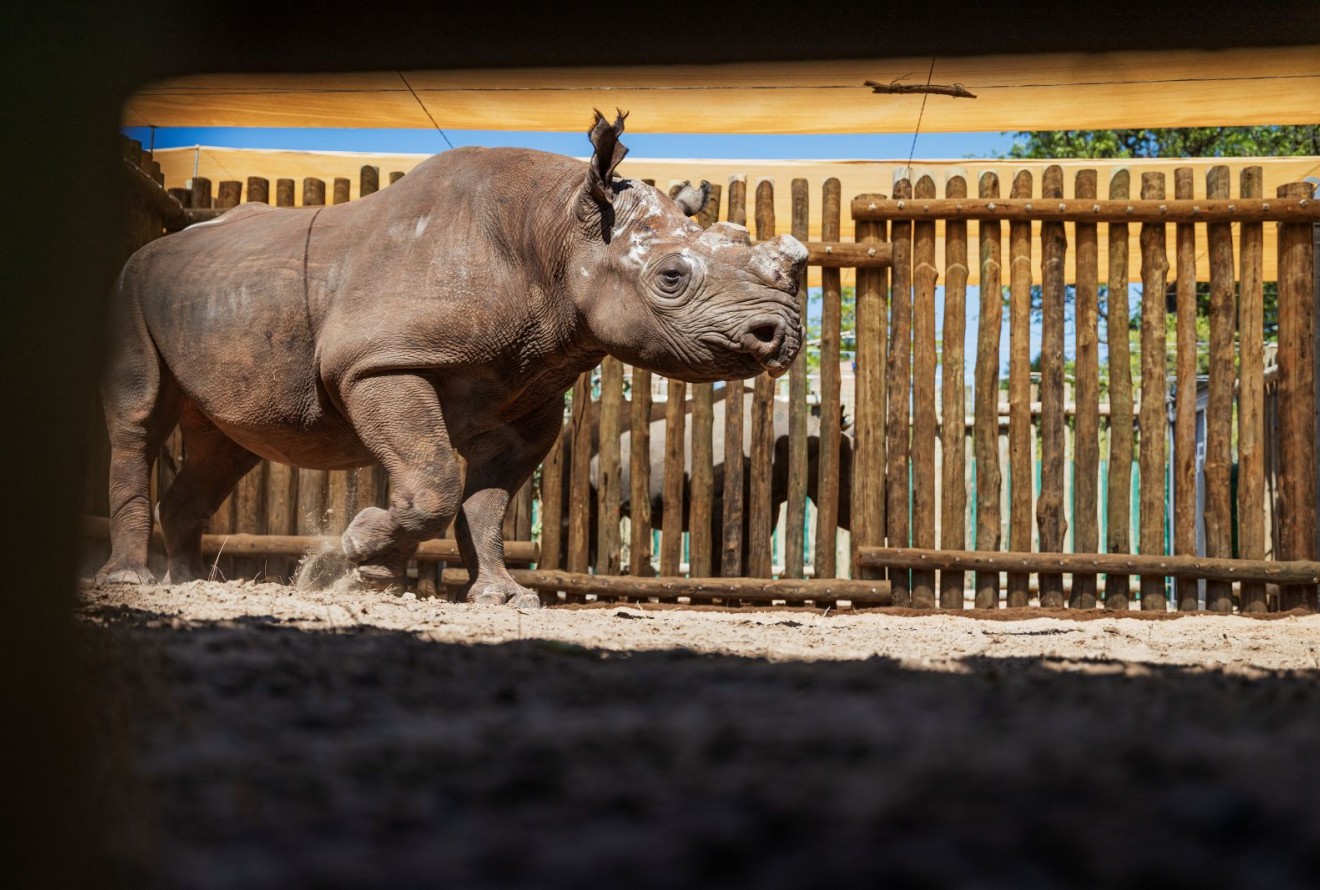
A group of critically endangered black rhino has been reintroduced into Zimbabwe\'s Matusadona National Park, more than three decades after organised poaching wiped the species from one of the country\'s most important wildlife strongholds.
Situated on the southern shores of Lake Kariba in north-western Zimbabwe, Matusadona was once at the heart of the country\'s largest contiguous black rhino population before the poaching crisis of the late 1980s and early 1990s forced wildlife authorities to relocate surviving animals to safer areas across the country.
The operation, led by the Zimbabwe Parks and Wildlife Management Authority (ZimParks), African Parks and Matusadona National Park, represents a full-circle moment for a landscape that once supported Zimbabwe\'s largest contiguous population of black rhino.
The animals were sourced from Imire Rhino and Wildlife Conservancy, Matobo National Park and another undisclosed location. Conservationists note that some of the rhino are descendants of animals originally removed from Matusadona during the poaching crisis and relocated to secure areas for their survival.
ZimParks Director-General Professor Edison Gandiwa described the reintroduction as a landmark achievement for the country\'s conservation efforts.
\"The return of black rhino to Matusadona National Park is a historic event and a proud moment for Zimbabwe\'s conservation efforts. It is a testament to what is possible when government, conservation organisations, and local partners work together with shared purpose,\" he said.
\"ZimParks has always known that Matusadona has the habitat and now, through this partnership, the security and management capacity to support a viable population. Today, that conviction has been realised.\"
The rhino have been transported by air and placed in specially constructed holding bomas, where they will undergo monitoring before being released in phases into a secure 175-square-kilometre Intensive Protection Zone. Each animal has been fitted with a tracking device to support real-time monitoring.
For African Parks, the return carries both ecological and symbolic significance.
African Parks Chief Executive Officer Peter Fearnhead said the loss of black rhino from Matusadona in the early 1990s helped shape the thinking that eventually led to the creation of the organisation.
\"I was in Matusadona in the early 1990s and witnessed the loss of black rhino. It is therefore personally gratifying to have been a partner in the revival of Matusadona, together with ZimParks, local communities and so many dedicated people,\" he said.
\"Once again, the black rhino is an icon in this magnificent landscape.\"
The reintroduction supports Zimbabwe\'s National Rhino Strategy and is expected to establish a founder population capable of contributing to the country\'s broader rhino metapopulation over the next 15 years, while reinforcing Matusadona\'s ongoing revival as one of Africa\'s premier conservation landscapes.

